
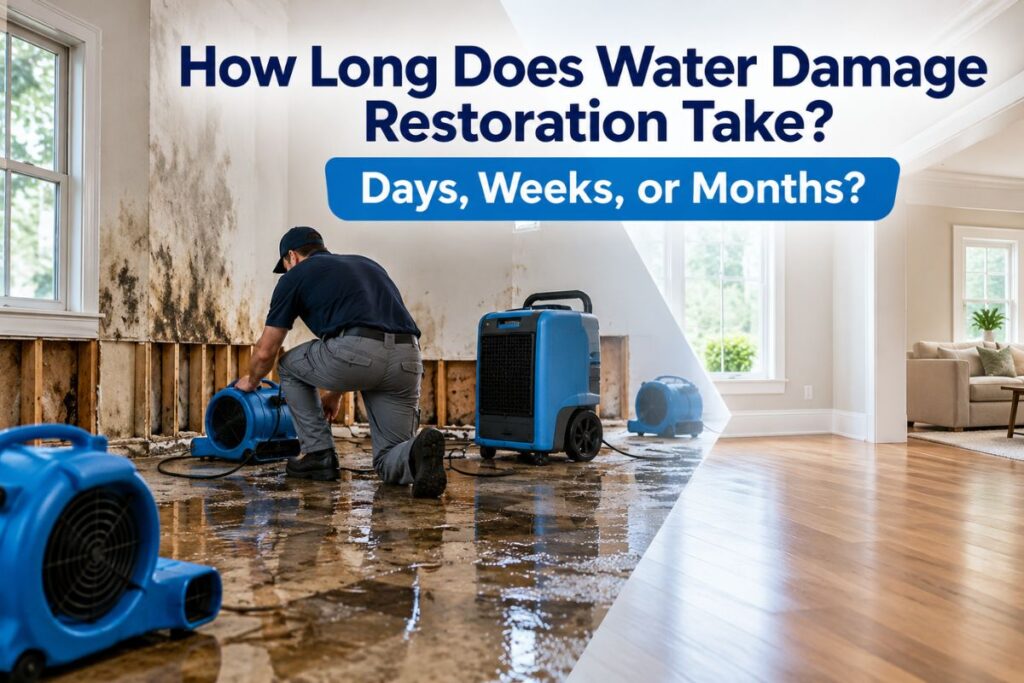
If water has just gotten into your home, you probably want to know how long does water damage restoration take and when life will return to normal. It’s hard to give a clear date because no two jobs are the same. That is why this guide covers how long each level of damage takes, the steps of the process, and what can make the job shorter or longer.
What Is Water Damage Restoration?
Water damage restoration is the process of returning a property to the way it was before the water got in. That means removing the water, drying the building, cleaning it, and repairing what was damaged. It covers far more than drying a wet floor. Basic cleanup focuses mainly on removing water and surface mess, while restoration also fixes the damage the water caused.
How Long Does Water Damage Restoration Take?
The time needed for water damage restoration depends on how much water spread, which materials were affected, and how quickly the cleanup started. A small leak in one room is a very different job from a flooded home. Here is how long water damage restoration takes for each level of damage:
- Minor damage, such as a small leak caught early. It often takes 3 to 5 days for drying.
- Moderate damage, such as a burst pipe that spread to several rooms, usually takes 1 to 2 weeks.
- Severe damage, such as a flood or sewage backup, can take several weeks or even months.
- These are common ranges, so the actual water damage restoration timeline for your own job may be shorter or longer.
Water Damage Restoration Timeline, Step by Step
Water damage restoration is the process of drying and cleaning the property after water gets inside. Many people think it is one quick job. In reality, there are several steps to the work, and some of them take hours or days. Here is what usually happens from the beginning to the finish:
1. Inspection and Assessment
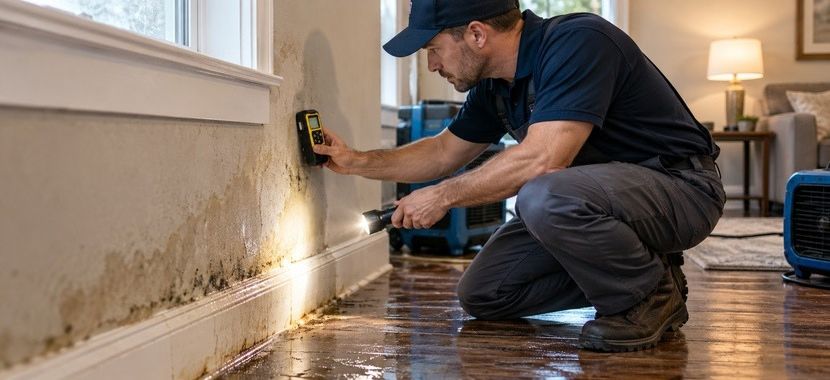
This step usually takes a few hours to a day. The technicians will first find where the water came from and make sure it has stopped. Next, they will check the affected walls, floors, and ceilings with moisture meters, since water can hide in places you cannot see. These readings show how big the job is, so the crew can plan the right equipment and the right number of people. Once the plan is ready, the crew will start removing the water.
2. Water Extraction
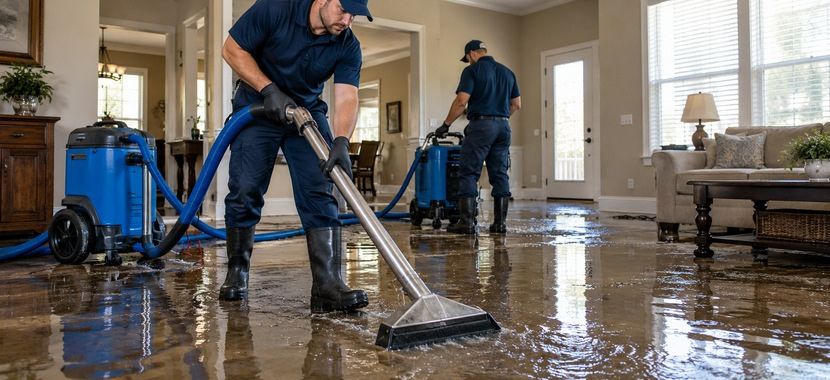
Once the inspection is complete, the next step is to remove any standing water. In smaller areas, this may take a few hours, while larger floods can take longer. The crew may use pumps for deeper water and wet vacuums for carpets, flooring, and other surfaces. For a bigger flood, the crew may use high-capacity extraction equipment to clear water faster. Speed matters here because the longer water sits, the deeper it soaks into the building.
3. Removing Damaged Materials
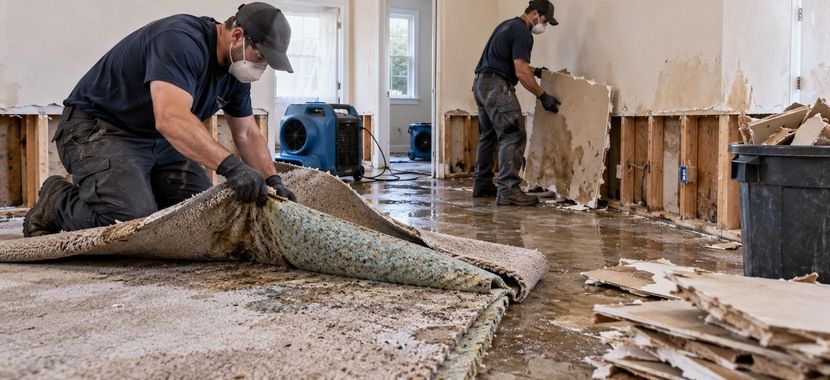
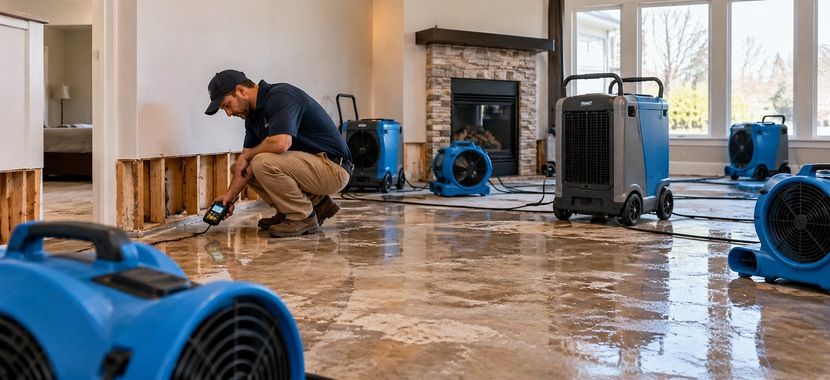
Some materials hold on to water too long to dry out, so they will be taken out first before the drying stage begins. The removal itself usually takes a few hours, or a day for a larger area. Soaked carpet padding, wet insulation, and damaged drywall are the most common ones. The crew will often cut out the lower part of a wet wall as well, which also opens the space inside so air can reach it.
4: Drying and Dehumidifying
After damaged materials are removed, the crew will set up air movers and dehumidifiers to remove moisture from the remaining walls, floors, and other surfaces. Drying usually takes about 3 to 5 days, and it can take up to a week in a larger area. Expect some noise while the equipment runs day and night. The crew will return each day to check how dry things are and move the equipment where it is needed. Drying is complete when moisture readings show that the affected materials have reached a safe and acceptable level. Once that happens, the team can move on to cleaning and sanitizing.
5. Cleaning and Sanitizing
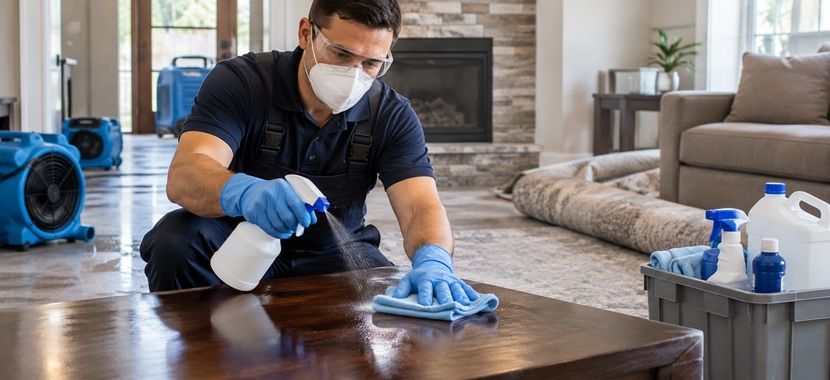
The crew will clean some areas while the drying is going on, so this final round often takes only one or two days. Surfaces will be wiped and vacuumed. A safe antimicrobial treatment will then be applied to stop bacteria and odors. Wet belongings, such as furniture and rugs, can be cleaned at this stage as well.
6. Repairs and Rebuild
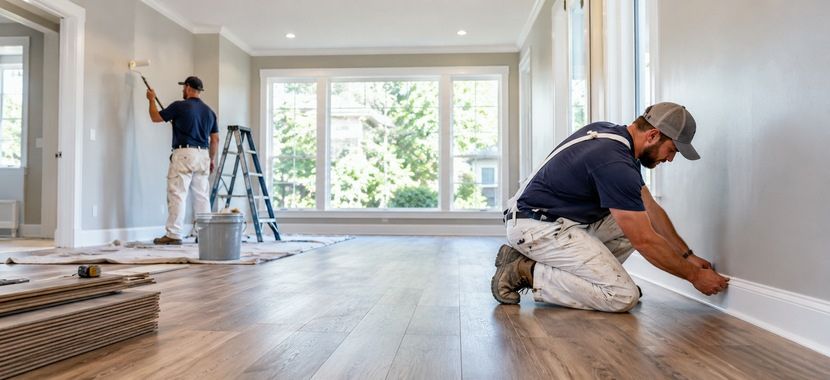
The final stage is repairing or replacing the materials that were removed earlier. A small job, such as replacing drywall and repainting one room, may take only a few days. A larger job with new flooring, cabinets, or structural repairs can take weeks, and in severe cases, several months. Material availability can also affect the timeline, especially when the new flooring, cabinets, or finishes need to match the rest of the property. Once the work is finished, the restoration is complete, and the space is ready to use again.
What Factors Make Restoration Take Longer or Shorter?
Two properties with a similar amount of water damage can still have very different restoration timelines. One may be back to normal within days, while another may take several weeks. Understanding these factors can give you a better idea of why some water damage restoration jobs move faster than others. Here are the main factors that can affect the restoration timeline:
The Type of Water
The biggest factor is where the water came from. Water from a clean source, such as a supply line leak, is the simplest to handle. Gray water comes from a washing machine or a dishwasher, and it needs extra cleaning before the work can move on. Sewage and other heavily contaminated water take the longest, because affected materials may need to be removed before the more thorough cleaning and sanitizing can start.
How Much Water There Is and How Far It Spread
The amount of water matters too, since more water means more to pull out and dry. It also matters how far it spread, because water does not stay where it starts. It moves across floors, soaks into walls, and can run down to the level below. The wider it spreads, the more areas the crew must dry, which takes more equipment and more time. Even a small amount of water can lead to a bigger job if it runs under flooring or into a wall.
What Materials Got Wet
Not all materials dry at the same speed. Hard surfaces, such as tile and glass, dry quickly because water stays on top. Porous materials, such as wood or carpet, soak up water and hold it much longer. Dense materials such as hardwood flooring, wall framing, and concrete can also hold moisture below the surface and take longer to dry completely. That is why one part of a property may be dry while another area still needs more time and monitoring.
How Quickly Work Starts
Once water gets in, time starts working against you, which is why the sooner restoration begins, the easier it is to limit further damage. Mold can begin to grow within 24 to 48 hours, so a quick response gives the crew a better chance to dry materials that might otherwise need to be removed or replaced. A late start can turn a job of a few days into one that takes weeks. If possible, stop the water source safely and contact a restoration company as soon as you notice the damage.
Insurance Approval and Permits
Insurance paperwork and permit requirements can sometimes add time to the restoration process. If you file a claim, the insurance company may need photos, estimates, or an inspection before approving some repair work. It can take a few days for small jobs or up to a few weeks for large ones. Emergency steps, such as removing water and drying, can usually begin first. Bigger rebuilds, such as structural or electrical work, may also need a permit and an inspection from your city or county.
Wrapping Up
In short, water damage restoration takes a few days for a small leak and several weeks or even months for a severe one. The steps above show why, from the first inspection to the final rebuild. You also know the factors that change the pace. With these points in mind, you can plan ahead.
If you need a water damage restoration service in Marietta, Revo Restoration & Construction is glad to help. We are an IICRC-certified team with over 20 years of construction experience. Our work covers Smyrna and the nearby areas as well. We offer free inspections, and our crew is available 24/7 for emergencies. Therefore, call us at 478 800-1057 when you are ready.