
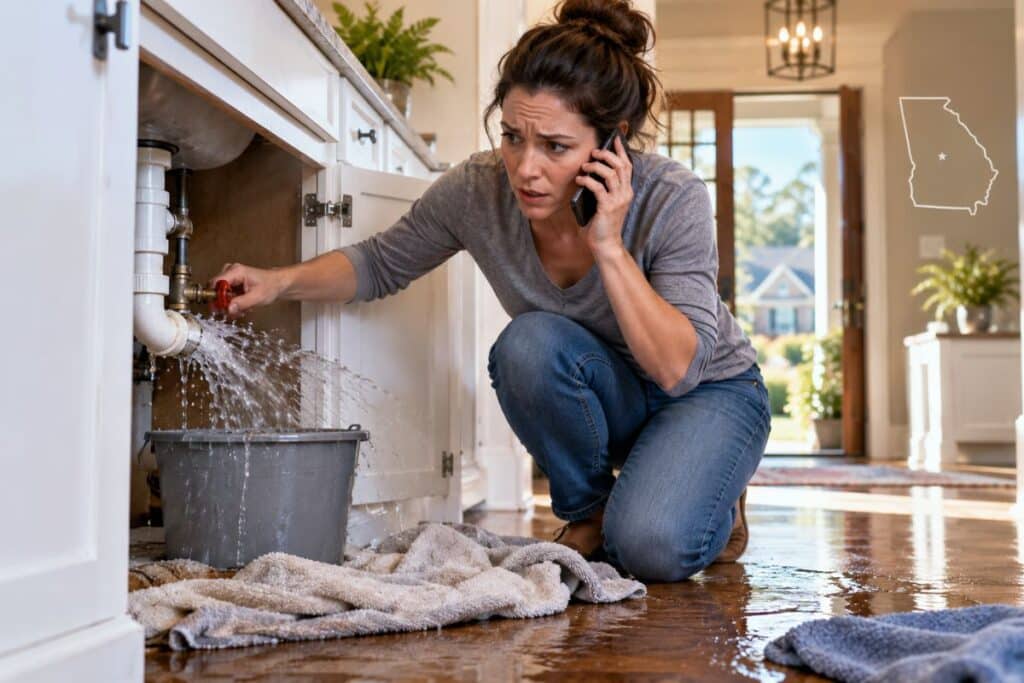
If a pipe just burst in your Georgia home, what you do in the first 24 hours after a burst pipe can decide whether this turns into a quick fix or a much bigger repair. None of that has to feel overwhelming. It really just comes down to doing a few things in the right order.
Below, you’ll find exactly what to do after a burst pipe, the mistakes to avoid, and when it’s time to call in a professional. If you live in Marietta or nearby, you’ll also find answers to the questions homeowners ask most after something like this happens.
How Do You Know If You Have a Burst Pipe?
A burst pipe doesn’t always announce itself with a flood. Sometimes the first clue is something smaller, like a hissing sound behind a wall or water pooling in a spot that’s usually dry. A few signs are worth watching:
- Your water pressure drops suddenly, even though nothing else in the house changed
- You hear water running somewhere when every faucet is off
- There are stains on the ceiling or walls that weren’t there before
- A damp smell shows up out of nowhere
- Your water bill jumps for no clear reason
- A spot on your floor feels warm or damp, which often points to a leak in the slab, common in Georgia homes.
If you notice several of these signs at the same time, there may be a serious plumbing leak behind a wall, under the floor, or somewhere else in the property.
Is a Burst Pipe an Emergency?
Yes, almost always. If you’re wondering what happens if your pipes burst and nobody deals with it right away, here’s the short version. Water soaks into drywall, flooring, and insulation within minutes. Every hour it sits raises the risk of warped wood, mold, and a bigger repair bill. If water reaches electrical outlets, wiring, or appliances, the situation can also become a safety hazard. So, acting quickly can help limit the damage and make the cleanup and repair process easier.
What to Do in the First 24 Hours After a Burst Pipe
After a pipe bursts in your home, the first few hours are very important. What you do during this time can help limit water damage before professional help arrives. Here’s what to do during the first 24 hours, step by step:
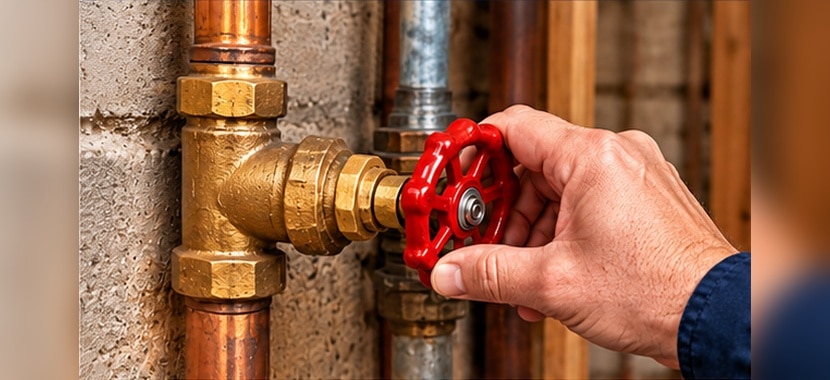
First 10 Minutes: Stop the Water
Two things matter most right now, and they need to happen before anything else:
- Shut off your main water supply. Find your home’s main water shutoff valve and close it completely. In most Georgia homes, it’s in the basement, a crawl space, or a utility closet, usually near where the water line enters the house.
- Stay away from electricity near water. If water is anywhere near an outlet, appliance, or the electrical panel. Do not touch electrical equipment while standing in or near the wet area. Shut off power only if you can safely reach the breaker from a dry location. If you cannot, call a qualified professional.
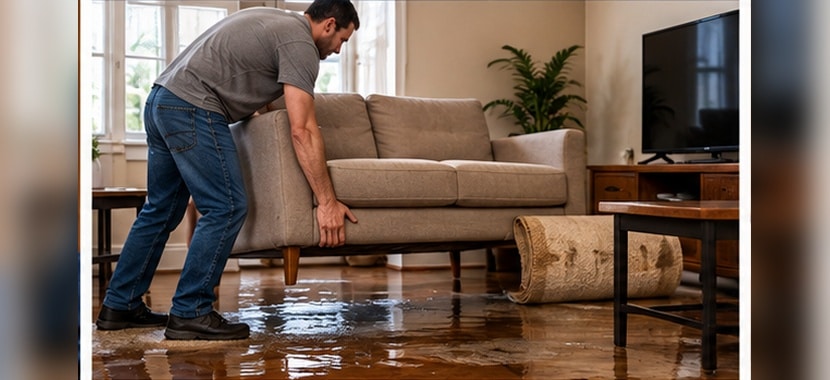
Minutes 10 to 30: Protect What You Can
Once you’ve stopped the water from the burst pipe, move quickly to protect what’s still at risk. Move furniture, electronics, rugs, and other valuable items away from the wet area. Place them somewhere dry and, when possible, off the floor. Start soaking up standing water with towels or a wet vacuum if you have one, since every extra minute lets more water sink into flooring and subfloor.
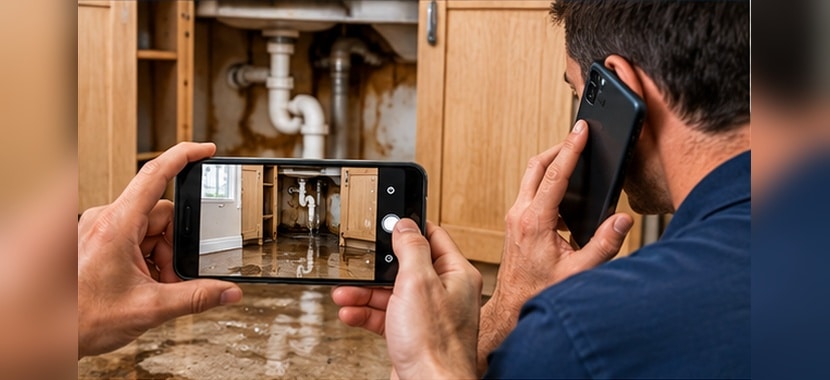
Within the First Hour: Document and Call for Help
Once you’ve soaked up the worst of the water, take photos and a short video of the damaged area before doing anything else. This matters more than it seems right now, as your insurance company will need these records for your claim later. Then call a plumber to fix the burst pipe itself. Stopping the water supply only keeps more water from entering the home, but the damaged pipe still needs to be repaired.
Hours 1 to 6: Start Drying
Once the immediate leak is under control, a few things help slow the spread while you wait for professional help:
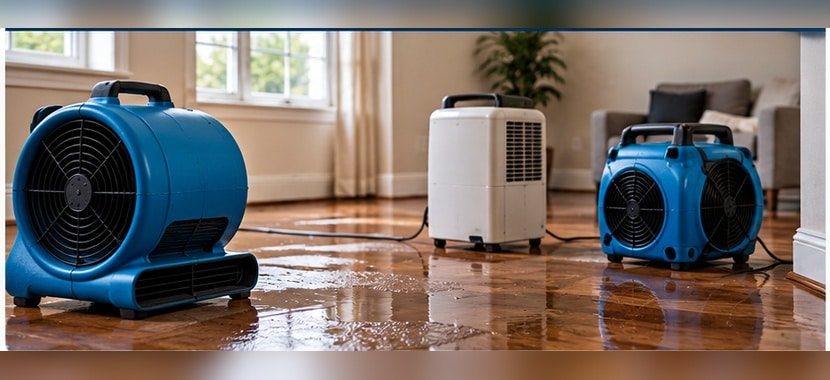
- Open windows if the weather allows
- Point fans directly at the wet areas
- Run a dehumidifier if you have access to one
These steps can simply help slow the spread of moisture while you wait for professional help.
Hours 6 to 24: Watch for What You Can’t See
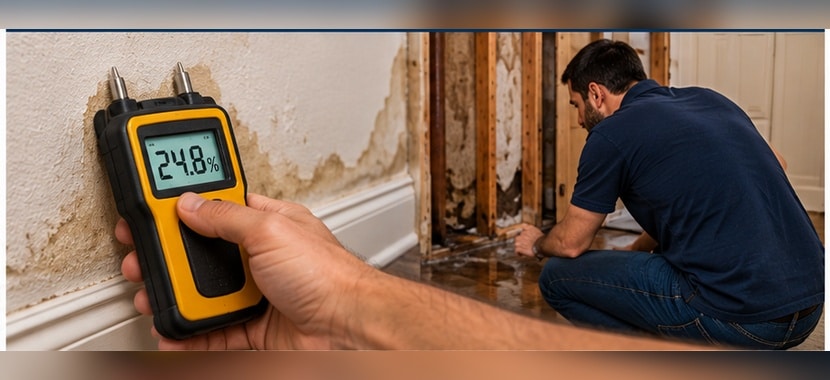
This is where most of the real damage happens, even if you can’t see it yet. Water can sit inside drywall, under flooring, or behind cabinets and insulation long after the floor or walls look dry. That’s exactly the kind of damage a homeowner can’t fully catch on their own. After a major burst pipe, this is usually the point where a professional water damage restoration team steps in to check moisture levels, locate hidden wet areas, and begin the proper drying process.
What Not to Do After a Burst Pipe
A few common reactions actually make things worse, even though they feel like the right move in the moment. A few of these might sound familiar, but they’re worth repeating.
- Skip the regular household vacuum for standing water. It isn’t made to handle water like that. So, using it can short the motor and give you an electric shock.
- Do not walk through standing water near an outlet or your electrical panel. Even if you think the power’s off, there may still be an electrical hazard. Stay out of the area until it is safe.
- Do not use hair dryers and space heaters on wet drywall or insulation. Direct heat dries the surface but doesn’t touch the moisture underneath. That’s why fans and dehumidifiers are generally better for controlling moisture while professional drying is arranged.
- Never assume your homeowners insurance automatically covers the damage. Most policies cover sudden, accidental bursts, but coverage can depend on what caused the pipe to fail in the first place.
- Do not throw away damaged items before they’re documented or checked. Take photos and videos before removing damaged items when it is safe to do so. Your insurance company may need proof of the damage when reviewing your claim.
Wrapping Up
Now you know early signs of a burst pipe, what to do in the first 24 hours after a burst pipe, and what not to do. If you are dealing with water damage right now, acting quickly can help limit how far the moisture spreads and reduce the risk of bigger repairs later.
At Revo Restoration & Construction, we can inspect the affected areas, explain what we find, and help you understand the next steps. No pressure. Therefore, you can give us a call at (678) 967-3087 whenever you’re ready.
Frequently Asked Questions
How do I shut off the water to my whole house?
Find your home’s main water shutoff valve, usually near where the main water line enters the property. It may be in the basement, crawl space, utility room, garage, or near an outside wall. Turn it clockwise until it stops. If you can’t find it, shut off the water at the street using a curb key.
Will homeowners insurance cover a burst pipe?
Most home insurance policies cover a pipe that bursts out of nowhere, but what they pay depends on why it failed. A pipe that burst because of freezing weather is usually covered. While damage related to poor maintenance or long-term corrosion may be treated differently. Check your policy or call your agent to confirm.
How long does it take for mold to start growing after a pipe bursts?
Mold can begin growing within about 24 to 48 hours when moisture remains in a warm, damp area. That is why removing standing water and starting the drying process quickly is so important on the first day. If mold has already started, mold remediation is a separate job from water cleanup, and it’s worth having it checked separately.
Is it safe to use electricity in a room with water damage?
Do not use outlets, switches, appliances, or other electrical equipment in a water-damaged area until you know it is safe. Water and electricity can create a serious electrical shock risk. If there is any doubt, have a qualified electrician or restoration professional check the area first.
How much does it cost to fix a burst pipe in Georgia?
In Georgia, fixing the physical plumbing on a burst pipe generally costs between $300 to $2,000. The exact price depends on how much water spread and how long it sat before cleanup started. Minor damage might only need drying equipment, while damage that reached drywall, flooring, or the ceiling can run much higher. A professional inspection is the best way to get an accurate number for your home.
Can a burst pipe cause low water pressure?
Yes. When a pipe bursts, water leaks out at the break instead of reaching your faucets and fixtures normally, so pressure often drops throughout the house. A sudden drop in water pressure can actually be one of the first signs of a hidden pipe break.